A stance against ingested microplastics
How probiotics may help and why Winnow is leaning in
Plastic is woven into the fabric of our modern life. We depend on it. Much of what we eat, drink, and use every day is packaged in plastic, made with plastic, or at very least has come in contact with plastic when it’s being made and transported [1-2]. And even if we reduce plastic wherever possible, the reality is that we cannot yet eliminate it entirely. Not while lifesaving IV bags, medical implants, sterile packaging, and essential infrastructure all rely on plastic components.
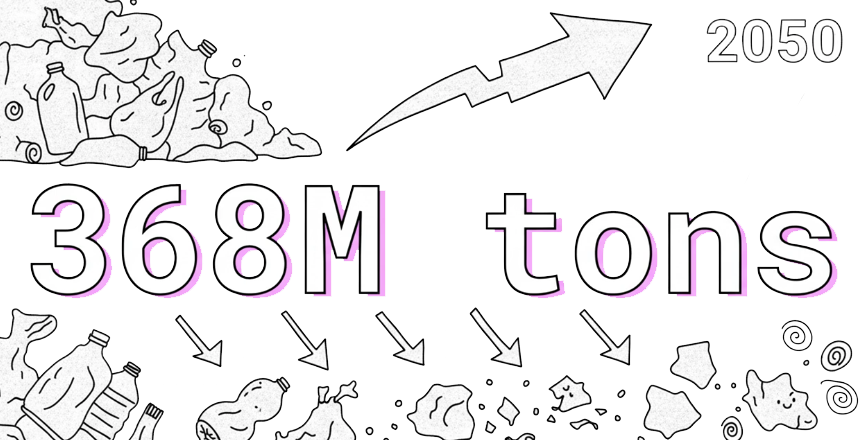
Because it can be used in so many ways, we make tons of it. Literally. About 368M tons were produced in 2019 alone, so much that if we packed all that plastic into train cars, they would stretch around the world more than five times over. And we aren’t even slowing down, instead the amount we produce is projected to skyrocket by 2050 [3].
Where does all that plastic go? Absolutely everywhere. When scientists go looking, we find plastics even in the most remote stretches of the planet [4]. With no natural processes to handle all this waste, almost all the plastic polymers we’ve ever produced are still with us. Our products get physically broken down, fragmenting into smaller and smaller pieces that persist and move through the environment [5]. This is where the terms microplastics and nanoplastics come into play [6].
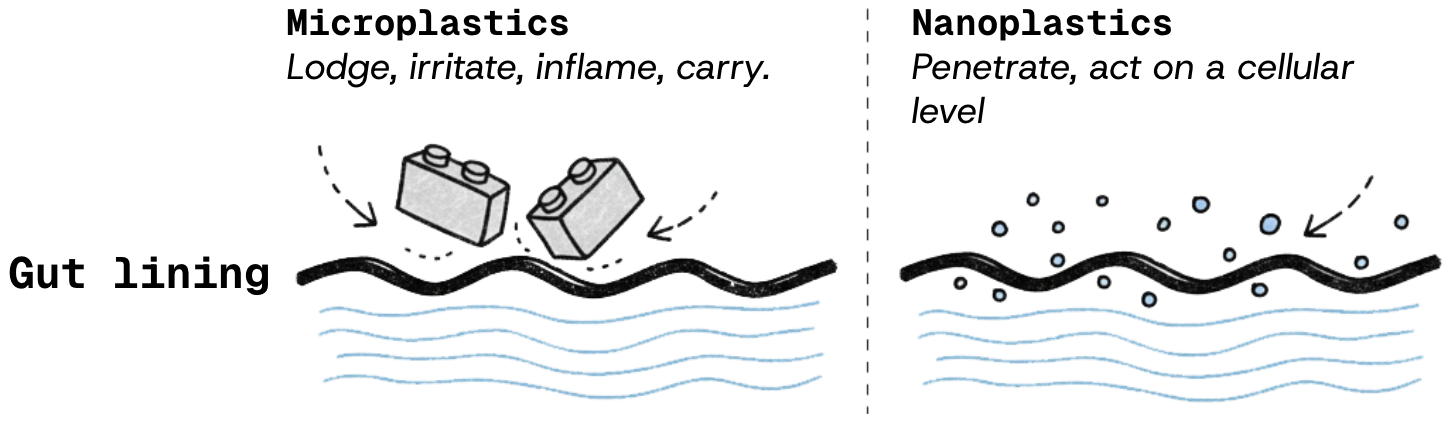
Microplastics are particles smaller than a millimeter. A good reference is the width of a human hair or smaller. With ten average human hairs fitting into just one millimeter.
Nanoplastics are 1000 times smaller than microplastics. At that scale, they are smaller than individual human cells, smaller than bacteria, at a size that lets them pass through the barriers our bodies use to keep out invaders.
And these particles are showing up in our most ordinary foods and water sources. We are not talking about obscure or unusual items. They have been found in drinking water, seafood, crops, and livestock. The everyday staples of life. Most of us are ingesting tiny plastic particles every single day.
For years, we assumed these particles were largely inert, simply passing through the digestive system without causing harm. But emerging evidence challenges that idea, especially for the smallest particles. These particles can cross the gut barrier, the thin layer that separates the digestive tract from the rest of the body [7-12].
That raises a straightforward and important question:
Is there a way to intercept some of these ingested plastic particles before they cross the gut barrier? Because once they get inside of us, we don’t yet have any tools to get them out.
Surprisingly, a promising candidate comes from something very familiar: probiotics.
Most people think of probiotics as “gut-healthy” bacteria that support digestion, regularity, and microbial balance. And that’s true. A good probiotic should deliver noticeable benefits for gut comfort and digestive function.
Scientists have known for a long time that certain probiotics are incredibly good at binding to other things like heavy metals and fungal toxins. And, interestingly enough, recent work shows some can physically bind to plastic particles, almost like a biological glue.
The exterior of a probiotic bacterial cell is covered in fat and sugar molecules that can latch onto micro- and nanoplastics.
From there, the idea becomes simple:
If bacteria can stick to plastics, then the combined clump is more likely to exit the body through normal digestion, rather than crossing our gut barrier.
This mechanism has not yet been demonstrated in humans. But it's been shown in the lab and in mouse models [14-16]. And that data is remarkably encouraging.
What the preclinical research shows
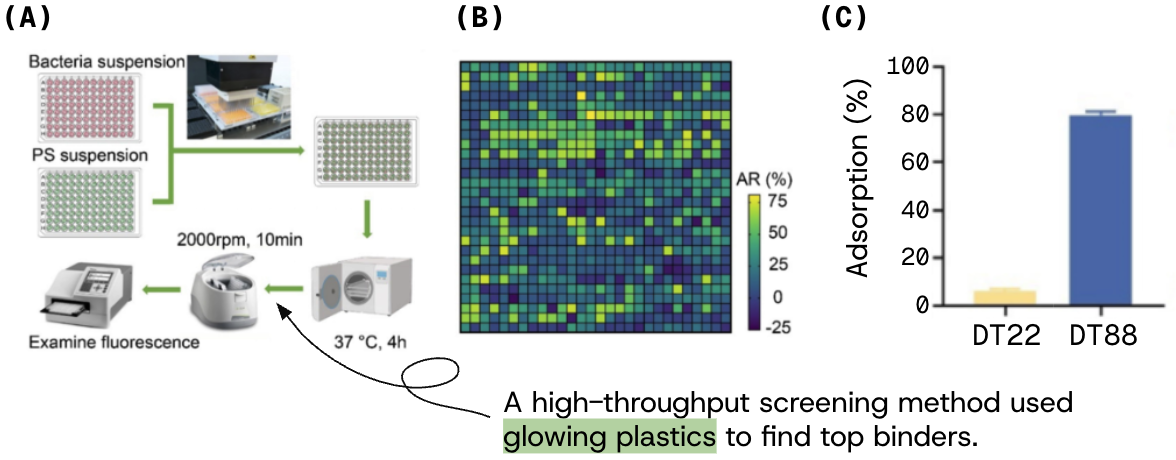
Early attempts to identify these “plastic binding” bacteria used a simple but clever approach. Researchers took tiny polystyrene particles, the same type of plastic found in styrofoam, and tagged them with dyes so they would glow under a microscope. They mixed those glowing plastics with different probiotic bacteria and followed the glowing plastic to see which bacteria were able to stick.
In a test tube, scientists followed which bacteria were able to stick to and remove the most glowing plastic from their samples. This led them to identify a probiotic strain they named DT88, that stuck to more plastic than the rest.
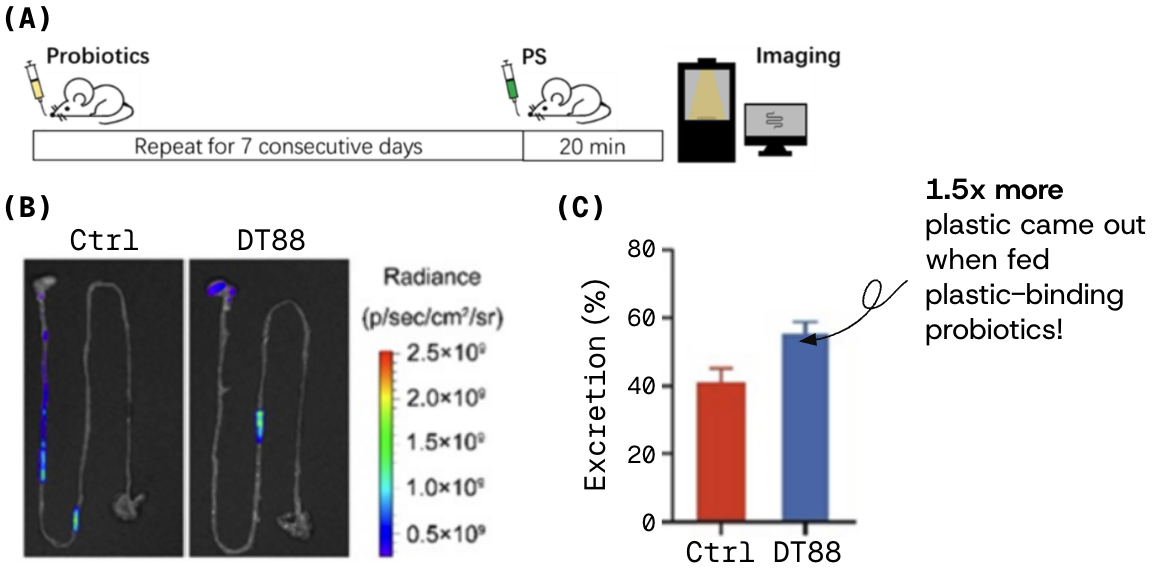
They next asked whether this would work inside of a living system. To test that, researchers gave mice DT88 for a week, and exposed them to a controlled dose of glowing microplastics. The results were straightforward: without probiotics, only about 40% plastic particles naturally passed through the mice and were excreted. When DT88 was added to the diet, almost 1.5-times more plastics were expelled from the gut. That’s a lot less plastic left inside their bodies.
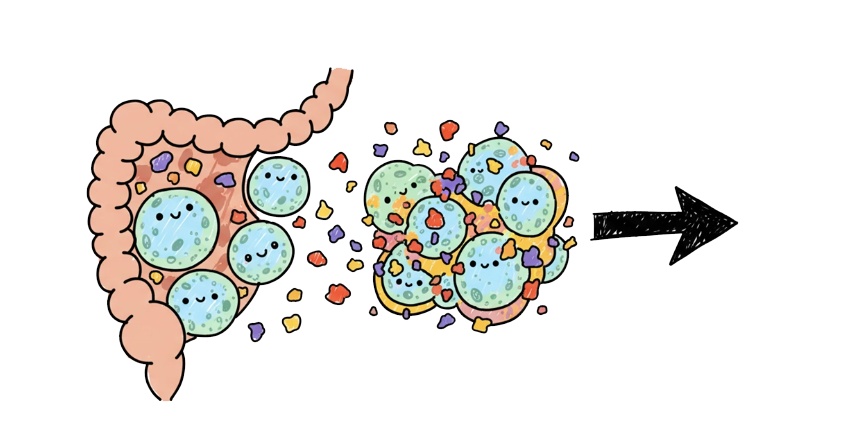
A useful way to picture this is to think of the probiotics as sticky spheres moving through the gut. As they travel, they latch onto plastic particles and pull them into clusters. Those plastics, now stuck to the spheres, are more likely to stay in the digestive tract, rather than interacting with the gut wall or crossing the gut barrier. Then, the rest is naturally taken care of by the body. The clusters are eliminated through normal digestion and excretion.
The researchers didn’t stop there. Microplastics are known to stimulate the immune system, a sign they are recognized as unwanted invaders, leading to inflammation. Researchers studied key signals and immune pathways to see how the mice were responding to the plastics.
What they found echoed their data for how much plastic was sticking around in the gut:
- Mice exposures to microplastics showed increases in classic inflammatory markers (IL-6, TNF-α, and IL-1β),
- and, they showed a drop in an important anti-inflammatory marker (IL-10).
But when the mice were fed DT88, their inflammatory markers started to look more like they did before they were fed plastics, both in the gut and the bloodstream.
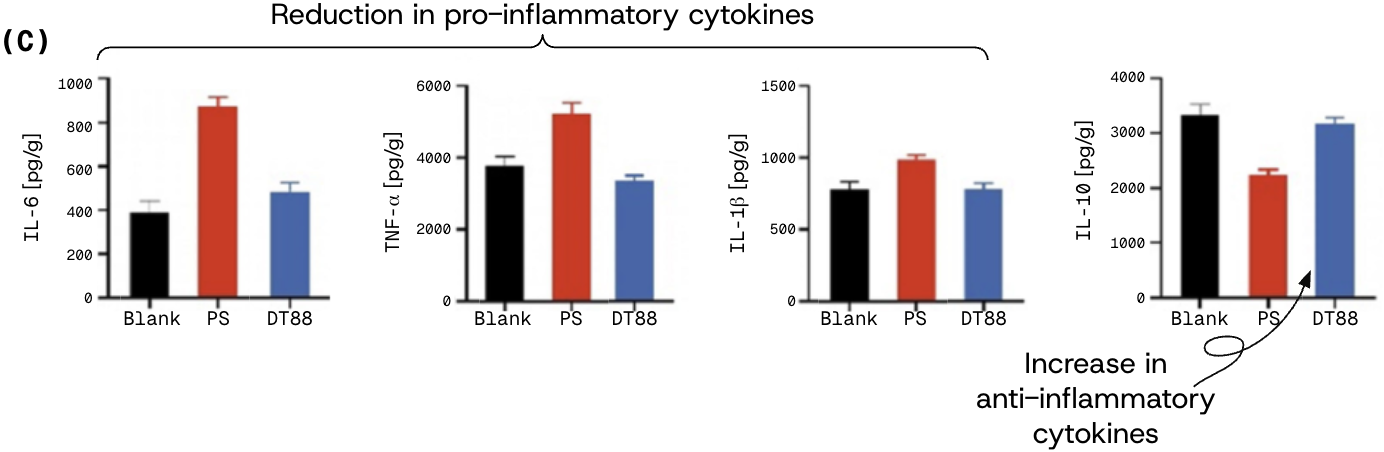
Together this pattern signals a shift towards a calmer, more regulated immune environment. In the gut, this often corresponds to better barrier integrity, less permeability, reduced oxidative stress, and protection against chronic, low-grade inflammation.
And this pattern has not appeared in just one study. It is showing up again and again across multiple cell models and mouse models. A consistent signal is emerging:
- Certain probiotic strains bind microplastics and nanoplastics extremely well. Not all probiotics do this; it is highly strain-specific. But the high performers show strong physical adsorption with measurable amounts of plastic stuck to their surface.
- These strains help protect the gut lining. In cell models, high-binding bacteria reduced the toxicity of nanoplastics on human colon cells, improving cell survival.
- In animals, they help the body pass more plastic. Mice given specific strains eliminated more plastic, retained less in their intestines, accumulated less in their livers, and showed lower inflammation and oxidative stress.
Does it even matter when our exposure levels are so small?
It is easy to assume that the amounts we ingest each day are too tiny to matter, especially when we can’t see it.
Sadly, with exposure happening every day, our internal levels are likely to keep risin. Microplastics can lodge in tissues and physically shear our protective gut layers as they pass through [17]. Nanoplastics are even smaller, interacting directly with individual cells. Both can cross the gut barrier through pathways like endocytosis, passive diffusion, and simple barrier disruption.
They weaken the gut lining and shift the proteins that hold it together [18].
And once they are in, they are difficult to remove.
These particles can accumulate over time, because the body has no dedicated system for clearing them. Even low daily exposure becomes meaningful when it compounds over decades.
- Plastic production increases every year
- More plastic produced each year → more fragmentation
- More fragmentation → higher concentrations of micro- and nanoplastics
- Higher concentrations → greater daily intake and accumulation over a lifetime
The trend is exponential, and not in our favor.
Until we address plastic production and waste at a global level, our bodies will continue to carry a growing share of the burden.
This is what makes early, practical interventions, like supporting the gut’s ability to intercept what we ingest, worth considering. Helping protect ourselves doesn’t solve the bigger problem, but it gives us more time to implement change and find ways to stop microplastics at their source.
And one more layer
Across human, animal, and advanced gut models, microplastics consistently shift the microbiome — the balance of bacteria that help keep the gut healthy [19-22].
The helpful bacteria that protect the gut lining and help us digest fiber tend to decline. This includes bacterial families like Lactobacillaceae, Bifidobacteriaceae, Akkermansiaceae, and Bacteroidaceae. These families support the mucus barrier, produce calming short chain fatty acids like butyrate, and help keep the immune system steady. When they drop, the gut becomes less resilient. The mucus layer thins, repair slows, and it becomes harder to keep harmful substances out.
At the same time, more opportunistic or inflammation-linked bacteria grow, including groups like Pseudomonadaceae and Enterobacteriaceae. These can generate more endotoxins, irritating gases, and oxidative stress, all of which put added pressure on the gut barrier and signal the immune system to stay on high alert.
The pattern is simple and consistent: fewer allies, more irritants, and a gut barrier under increasing strain.
Where Winnow fits in
Winnow was built from a simple idea:
Let’s upgrade the common probiotic. Turn a daily gut health habit into one that also has the potential to help defend against ingested plastics.
And that defense comes in three forms:
- Support the gut with a truly great daily probiotic: Winnow is built with probiotic species having well-established digestive benefits that help maintain comfort, balance, and regularity. Every batch is third-party tested to ensure it is rigorously clean and free of over 200 major allergens, pesticides, and heavy metals.
- Replenish the bacterial families most reduced by microplastic exposure: Current research shows that plastics consistently lower Lactobacillaceae and Bifidobacteriaceae. Winnow is intentionally rich in these families to help restore what microplastics erode.
- Add in “sticky” bacteria that bind plastics in preclinical models: These strains can physically attach to micro- and nanoplastics in lab and animal studies, increasing the chance that the particles exit through normal digestion. We built on the early research by screening for additional high performing strains, combining them into a consortium that binds five of the most common plastic types found in the gut, and formulating them in a format rigorously tested for safety and purity.
Here is the most important clarity:
This plastic binding effect has not yet been demonstrated in humans. No company can claim that. Still, the early data is too meaningful to ignore. Waiting for perfect information would delay a solution people could benefit from now. We believe the responsible path is to take action with the evidence we have, while transparently building stronger science one study at a time.
And in the meantime?
You are not rolling the dice. You are getting a high-quality, multi-strain probiotic with probiotic species having well-established digestive benefits.
So the equation becomes simple:
a great daily probiotic
+
preclinically-demonstrated microplastic defense
=
a no-loss choice for anyone looking to upgrade their current probiotic and take a stance against microplastics
Why we’re being transparent about the science
The field is new. Oversimplified claims do more harm than good.
We take a different approach:
- Be clear about what the science shows.
- Be honest about what still needs more work.
- And keep publishing better data as the work advances.
Our team is currently:
- Starting human gut-on-a-chip studies to understand penetration, protection, and inflammation.
- Expanding our plans for strain-level screening to improve on our current formulation.
- Working with diagnostic partners to track microplastics in people.
- Preparing for future human studies as reliable testing protocols emerge.
It is straightforward, methodical science. No shortcuts. But, also not waiting for perfection.
The bottom line
Plastic exposure is not going away. It is one of the defining environmental health stories of our generation.
Probiotics won’t “solve” plastic pollution, but certain strains may help reduce the amount that slips past the gut barrier. Preclinical data shows this is a real biological mechanism, not a wellness myth.
And here’s an important distinction. In this case, the agent and the target stay the same across species. It’s the same sticky probiotic strain and the same plastic particles, whether they’re in a mouse or a human. That’s very different from a typical pharmaceutical model, where the biological target in a mouse may not exist, or may function differently than in people.
What does change in humans is the environment around the interaction: a larger gut, a more varied diet, and a far more diverse microbial community. The core mechanism is conserved. The context is what shifts from person to person.
Winnow exists to bring this possibility into everyday life, responsibly and transparently:
- First, a great probiotic.
- Second, a promising new approach to help with ingested plastics.
- A step toward building personal resilience in a world where exposure is inevitable.
Winnow is exactly what we claim: A top-tier probiotic today, with a meaningful chance of doing even more tomorrow.
And if you’re looking for some additional discourse on micro- and nanoplastics, here are some great video discussions:
- The Effects of Microplastics on Your Health
- Longevity doctor: how microplastics are in your brain, heart, and blood
- What Microplastics Are Doing to the Brain, Body, and Reproductive Systems
- The Truth About Microplastics - Dr Rhonda Patrick
References
[1] Bora, S. S. et al. Microplastics and human health: unveiling the gut microbiome disruption and chronic disease risks. Front. Cell. Infect. Microbiol. 14, 1492759 (2024).
[2] Jiménez-Arroyo, C., Tamargo, A., Molinero, N. & Moreno-Arribas, M. V. The gut microbiota, a key to understanding the health implications of micro(nano)plastics and their biodegradation. Microb. Biotechnol. 16, 34–53 (2023).
[3] Global plastic production and global trends in millions of tonnes. Image available here. Year 2018. Credit: Maphoto/Riccardo Pravettoni. Data source: M. Bergmann, L. Gutow, M. Klage (eds) Marine Anthropogenic Litter (2015) Springer.
[4] O’Brien, S. et al. There’s something in the air: A review of sources, prevalence and behaviour of microplastics in the atmosphere. Sci. Total Environ. 874, 162193 (2023).
[5] Microplastics have been examined in various aquatic environments such as groundwater, rainwater, drinking water, our oceans, and freshwater ecosystems.
[6] US Environmental Protection Agency (EPA): Defines microplastics as particles ranging from 5 mm down to 1 nm, with nanoplastics as a subset smaller than 1 µm.
[7] Nihart, A. J. et al. Bioaccumulation of microplastics in decedent human brains. Nat. Med. 31, 1114–1119 (2025).
[8] Leslie, H. A. et al. Discovery and quantification of plastic particle pollution in human blood. Environ. Int. 163, 107199 (2022).
[9] Weingrill, R. B. et al. Temporal trends in microplastic accumulation in placentas from pregnancies in Hawaiʻi. Environ. Int. 180, 108220 (2023).
[10] Jenner, L. C. et al. Detection of microplastics in human lung tissue using μFTIR spectroscopy. Sci. Total Environ. 831, 154907 (2022).
[11] Schwabl, P. et al. Detection of Various Microplastics in Human Stool: A Prospective Case Series. Ann. Intern. Med. 171, 453–457 (2019).
[12] Vdovchenko, A. & Resmini, M. Mapping Microplastics in Humans: Analysis of Polymer Types, and Shapes in Food and Drinking Water—A Systematic Review. Int. J. Mol. Sci. 25, 7074 (2024).
[13] Teng, X., Zhang, T. & Rao, C. Novel probiotics adsorbing and excreting microplastics in vivo show potential gut health benefits. Frontiers in Microbiology. 15, 1522794 (2025).
[14] Shi, L. et al. Lactic acid bacteria reduce polystyrene micro- and nanoplastics-induced toxicity through their bio-binding capacity and gut environment repair ability. Environmental Pollution. 366, 125288 (2025).
[15] Shi, L. et al. Lactobacillus plantarum reduces polystyrene microplastic induced toxicity via multiple pathways: A potentially effective and safe dietary strategy to counteract microplastic harm. Journal of Hazardous Materials. 489, 137669 (2025).
[16] Bazeli, J., Banikazemi, Z., Hamblin, M. R. & Chaleshtori, R. S. Could probiotics protect against human toxicity caused by polystyrene nanoplastics and microplastics? Frontiers in Nutrition. 10, 1186724 (2023).
[17] Li, L. et al. Chronic exposure to polystyrene nanoplastics induces intestinal mechanical and immune barrier dysfunction in mice. Ecotoxicol. Environ. Saf. 269, 115749 (2024).
[18] Hsu, W.-H. et al. Polystyrene nanoplastics disrupt the intestinal microenvironment by altering bacteria-host interactions through extracellular vesicle-delivered microRNAs. Nat. Commun. 16, 5026 (2025).
[19] Ali, N. et al. The potential impacts of micro-and-nano plastics on various organ systems in humans. eBioMedicine 99, 104901 (2024).
[20] Eichinger, J., Tretola, M., Seifert, J. & Brugger, D. Review: interactions between microplastics and the gastrointestinal microbiome. Ital. J. Anim. Sci. 23, 1044–1056 (2024).
[21] Mauliasari, I. R. et al. Benzo(a)pyrene and Gut Microbiome Crosstalk: Health Risk Implications. Toxics 12, 938 (2024).
[22] Thin, Z. S., Chew, J., Ong, T. Y. Y., Ali, R. A. R. & Gew, L. T. Impact of microplastics on the human gut microbiome: a systematic review of microbial composition, diversity, and metabolic disruptions. BMC Gastroenterol. 25, 583 (2025).